news Why ISO 11064 Compliance Matters in Control Room Design?

Why ISO 11064 Compliance Matters in Control Room Design?

Why ISO 11064 Compliance Matters in Modern Control Room Solutions?

How many operator errors in mission-critical facilities trace back to poor workstation design rather than poor training? More than most organisations expect, and ISO 11064 exists specifically to close that gap.

The research field of human factors engineering confirms that human factors and poor workstation design can significantly contribute to operator fatigue, delayed response times, and decision-making errors in mission-critical environments. The critical operational environments, which include utility control centres and oil and gas facilities, smart city command hubs and airport operations rooms and security monitoring stations, experience failures which result from three types of errors, including delayed responses, misread displays and missed alerts caused by incorrect screen angles.

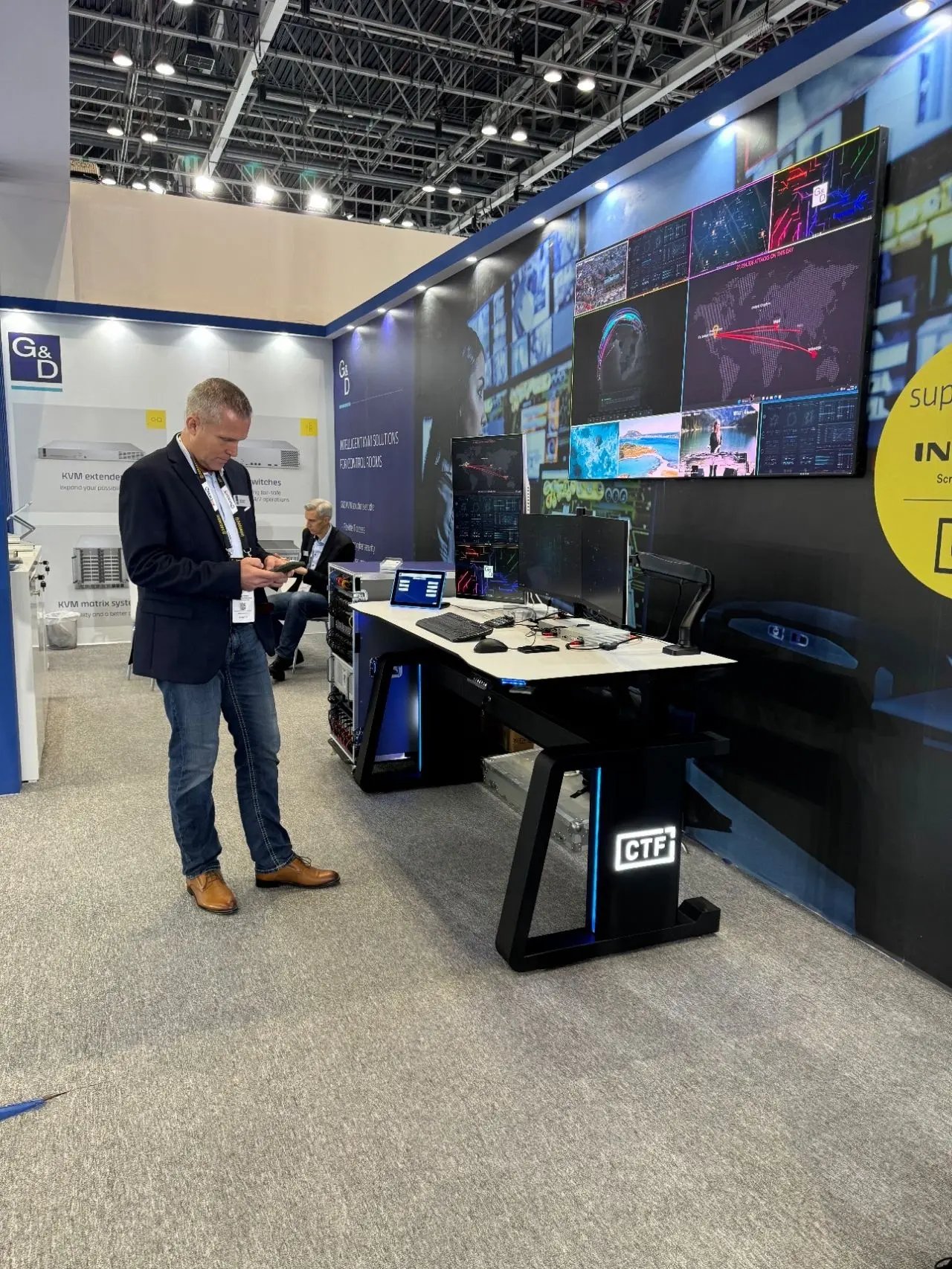
The international standard ISO 11064 exists to provide specific guidelines that companies must follow. The document functions as an extensive operator-focused framework that establishes ergonomic control room design standards for different control room components, including console dimensions and screen positioning, room acoustics and lighting standards and spatial workflow design. Understanding what it requires and why is essential for anyone commissioning or upgrading a control room in 2026.
What Is ISO 11064?

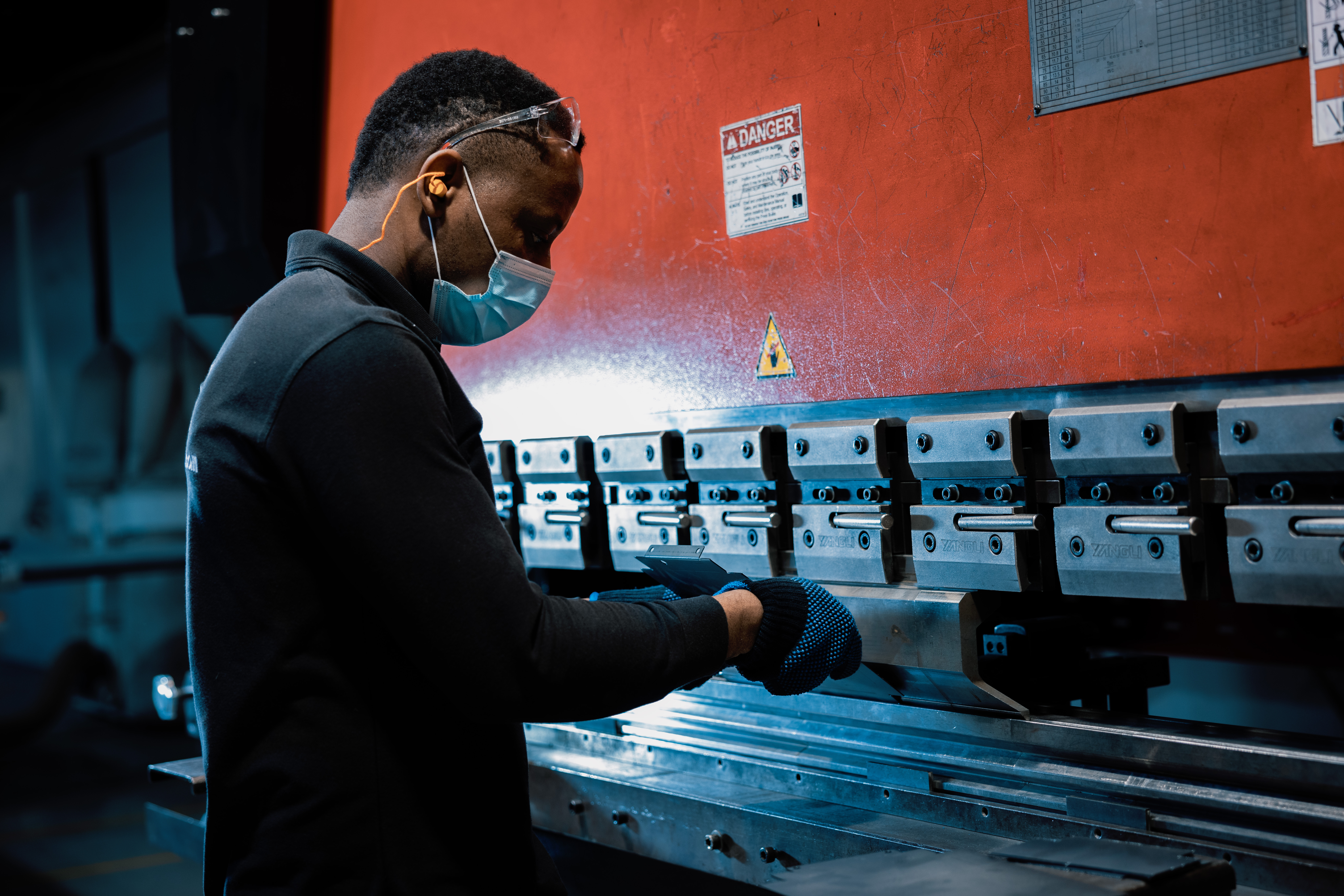
ISO 11064, which the International Organization for Standardization developed, consists of several parts that define ergonomic control room design. The growing understanding of human mistakes in control rooms resulted in this design solution because operators needed better design solutions. The environment itself was making it harder for operators to do their jobs safely and sustainably.

The standard consists of seven operational sections that each focus on a separate aspect of control room design.

Part Coverage
Part 1 Principles for the design of control centres, the overarching human-centred design methodology
Part 2 Principles for the arrangement of control suites, spatial organisation of the overall facility
Part 3 Control room layout, spatial planning, operator zones, and traffic flow
Part 4 Workstation layout and dimensions, console ergonomics, reach zones, and seated posture
Part 5 Displays and controls, screen placement, viewing angles, input device positioning
Part 6 Environmental requirements, lighting, acoustics, temperature, and ventilation
Part 7 Principles for the evaluation of control centres, assessment and post-occupancy review

Together, these parts form what is widely regarded as the global benchmark for ergonomic control room design. ISO 11064 is widely recognized as an international best-practice standard for ergonomic control room design and is commonly referenced in high-risk industries such as energy, utilities, transportation, and defence. while regulators and project specifications throughout the energy utilities, transportation, and defence sectors worldwide, including the UAE, use ISO 11064 as a reference.

ISO 11064 is not about visual appeal or premium finishes. The system exists to help operators work at high speed and with accurate results while maintaining their focus during critical situations that involve high stress and severe consequences of errors.

airporthub

Why ISO 11064 Compliance Matters in Practice?

The case rests on a straightforward chain of cause and effect: poor ergonomic design creates strain, strain leads to fatigue and errors, and errors in mission-critical environments have consequences far beyond the cost of getting the design right the first time.

  • Operator Performance and Human Error Reduction

    Poor console ergonomics adds unnecessary physical and mental load on operators already managing multiple data feeds across long shifts. ISO 11064 Parts 4 and 5 specify workstation dimensions, reach zones, and viewing parameters that reduce the load and free cognitive capacity for decisions that matter.

  • Operator Fatigue Reduction

    Twelve-hour shifts are common across Gulf facilities, and a poorly designed workstation, awkward posture, wrong screen placement, and poor acoustics require extended time to work through their increasing impact on exhaustion. ISO 11064 Part 6 establishes performance requirements through its specifications of lighting, acoustics, temperature, and air quality standards, which organizations must meet.

  • Safety in Mission-Critical Environments

    The three industries of nuclear energy, oil and gas extraction, and air traffic control have experienced multiple incidents, which showed that worker fatigue, poor sightlines and confusing layout designs caused these events to occur. ISO 11064 compliance establishes environmental conditions that help human performance while stopping all performance degradation.

The Key Design Elements ISO 11064 Governs

ISO 11064 touches every physical and environmental dimension of a control room. Here is where its practical impact is most visible.

  • Console Layout and Workstation Ergonomics

    ISO 11064 Part 4 defines workstation dimensions, primary and secondary reach zones, and requires frequently used controls to sit within easy reach. Height-adjustable consoles, surface angles, keyboard placement, and cable management are all governed by the standard.

  • Sightlines and Screen Placement

    ISO 11064 helps define proper viewing distances, display height, screen angles, and operator sightlines. Correct placement reduces neck strain, improves visibility, and supports faster decision-making during high-pressure operations.

  • Lighting Design

    General overhead lighting that creates glare on screens is one of the most common control room failures. ISO 11064 Part 6 specifies indirect general illumination (300-500 lux), adjustable task lighting per console, and layered ambient, task, and display lighting to prevent eye strain across a full shift.

  • Acoustics and Communication

    Noise interferes with the spoken communication that matters most under pressure. ISO 11064 Part 6 sets noise limits and acoustic treatment requirements, and in shared UAE command centres, acoustic zoning between workstation clusters is typically part of a compliant design.

Why ISO 11064 Matters for Control Room Console Manufacturers?

ISO 11064 helps manufacturers create consoles that improve comfort, efficiency, and long-term performance in control rooms. Key design benefits include:

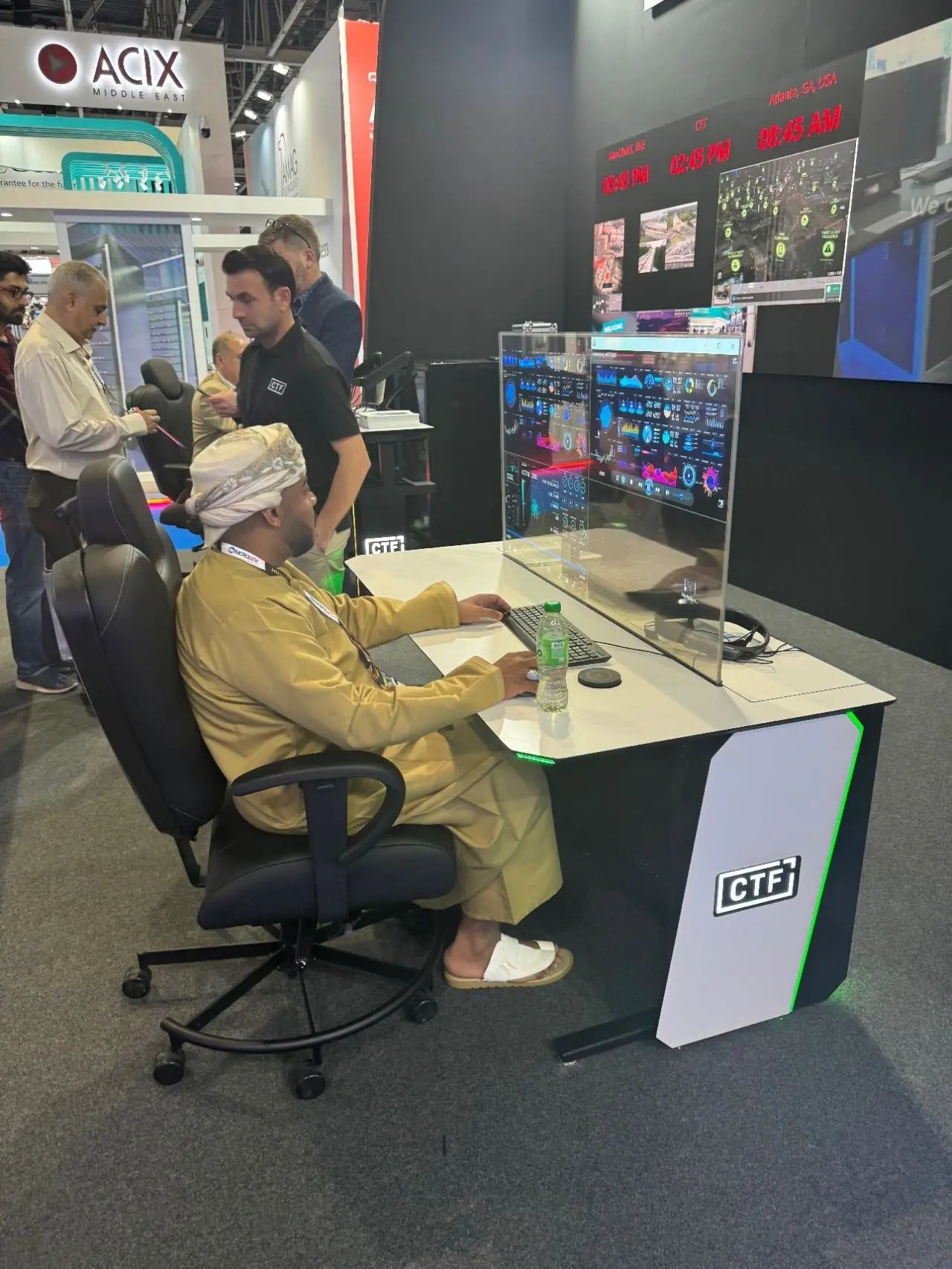
  • Height-Adjustable Consoles - Support sit-stand flexibility, improve posture, and reduce fatigue during long shifts.
  • Flexible Monitor Arms - Allow proper screen positioning for better visibility and reduced neck and eye strain.
  • Smart Cable Management - Keeps workstations organized, clutter-free, and easier to maintain.
  • Modular Workstation Design - Makes it easier to upgrade, expand, or adapt consoles as operational needs change.
  • Optimized Operator Reach Zones - Ensures essential controls and devices stay within easy reach, improving workflow and reducing unnecessary movement.
  • 24/7 Ergonomic Support - Helps operators stay comfortable, focused, and productive in continuous monitoring environments.

By following ISO 11064, control room console manufacturers can deliver safer, scalable, and operator-focused solutions built for mission-critical operations.

ISO 11064 and the UAE Control Room Market

The UAE's infrastructure projects, which include all of their smart city command centers in Dubai and Abu Dhabi and their extensive utility systems and transportation control centers require exceptional performance from their control rooms. The operations that need continuous operation to handle their extensive and intricate data systems face a risk from ergonomic violations, which they cannot withstand because they deal with public safety matters.

ISO 11064 has become an essential design requirement for project specifications throughout the Gulf region, which now includes this standard as a mandatory design element. The government agencies, utility companies and major project developers understand that control room design according to standards results in operational advantages, which include decreased operator sick leave, reduced errors, improved incident response times and diminished total ownership costs because it requires fewer costly post-installation changes.

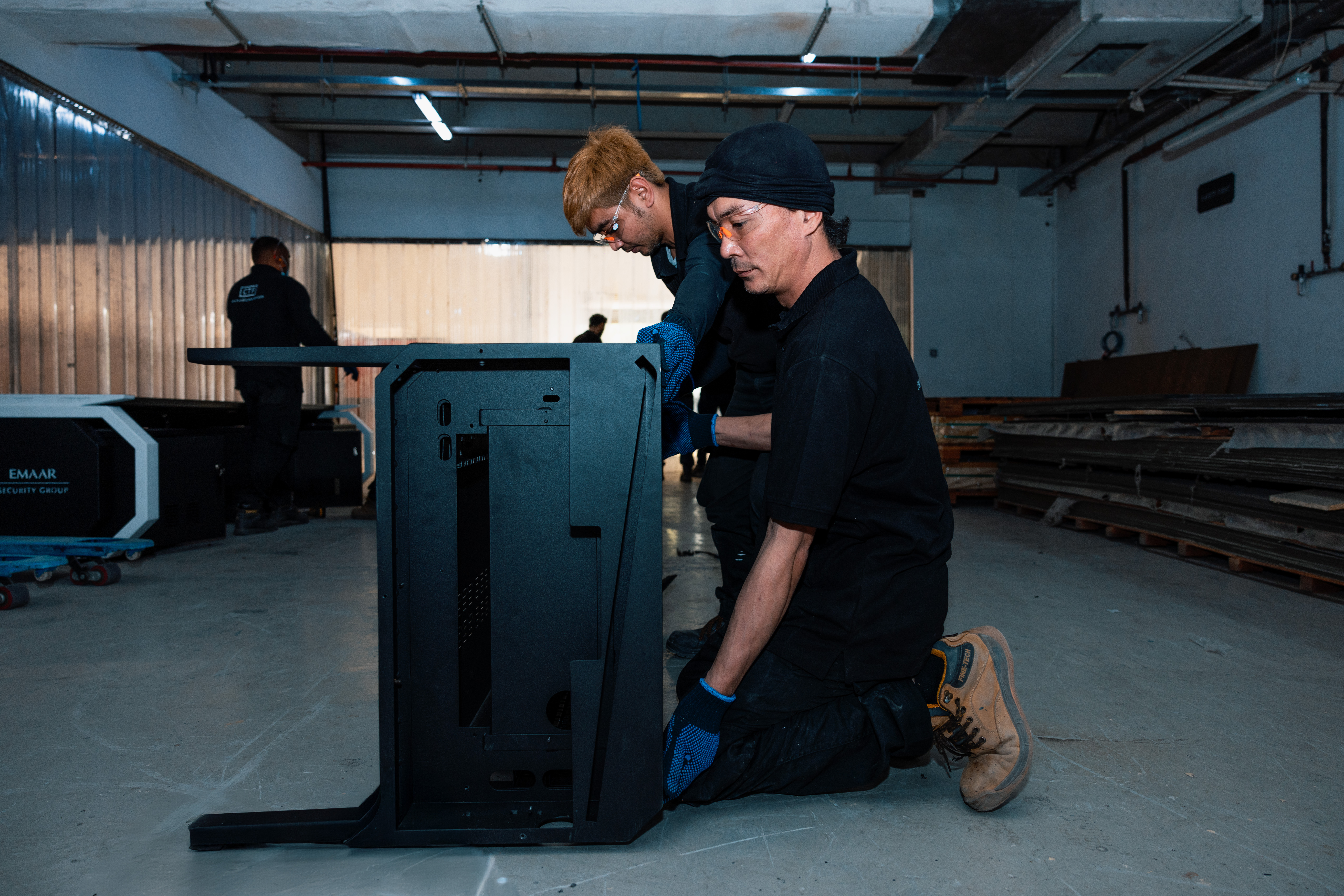
ISO 11064 compliance serves as a fundamental requirement for control room console manufacturers and system integrators who work within this industry. The standard needs to be implemented in operational environments through its complete design, which requires the identification of specific operational needs.
gccuae

Frequently Asked Questions

It is the internationally agreed standard for ergonomic control room designs and takes into account safety and performance parameters that affect the physical and environmental aspects in long shift operation.

Not universally by law, but it is referenced by the UK HSE, increasingly required in Gulf region project specifications, and widely considered the non-negotiable baseline for any serious control room project.

Console dimensions, reach zones, height adjustability, and screen mounting positions all fall under Parts 4 and 5. The non-compliant console design requires operators to maintain uncomfortable body positions, which results in increased fatigue and decreased work efficiency.

Oil and gas, power generation utilities, air traffic control, transport planning, smart city command centres, and security operations, anywhere important decisions are made under pressure over the long term.

The compliant room design centres on the operator's needs, including screens positioned at proper angles, lighting that avoids glare, and acoustics that enable effective communication. A non-compliant room is designed around the equipment, leaving operators to adapt at the cost of their performance and health.

1705504277456
1705504278002
1705590713886
1705046058571
1705504278453
1705590716289