Why Custom Control Room Consoles Matter More Than You Think?
Ask any facilities manager who's tried running a 24/7 operations centre out of standard office desks, and you'll hear the same story: it doesn't last. Cables tangle, monitors sit at the wrong height for rotating shifts, and equipment needing airflow overheats in drawers never built for it.
A control room isn't an office with extra screens; it's a different category of workspace. Treat it like one, and it eventually costs you: downtime, a fatigued operator, or a missed warning at the worst possible moment. Mission-critical furniture has to earn that label, not just claim it.
This matters especially in the UAE right now. Between Al Maktoum International's expansion toward 260 million passengers, growing utilities infrastructure, and rising government security investment, mission-critical facilities are being built faster than generic furniture can keep up.
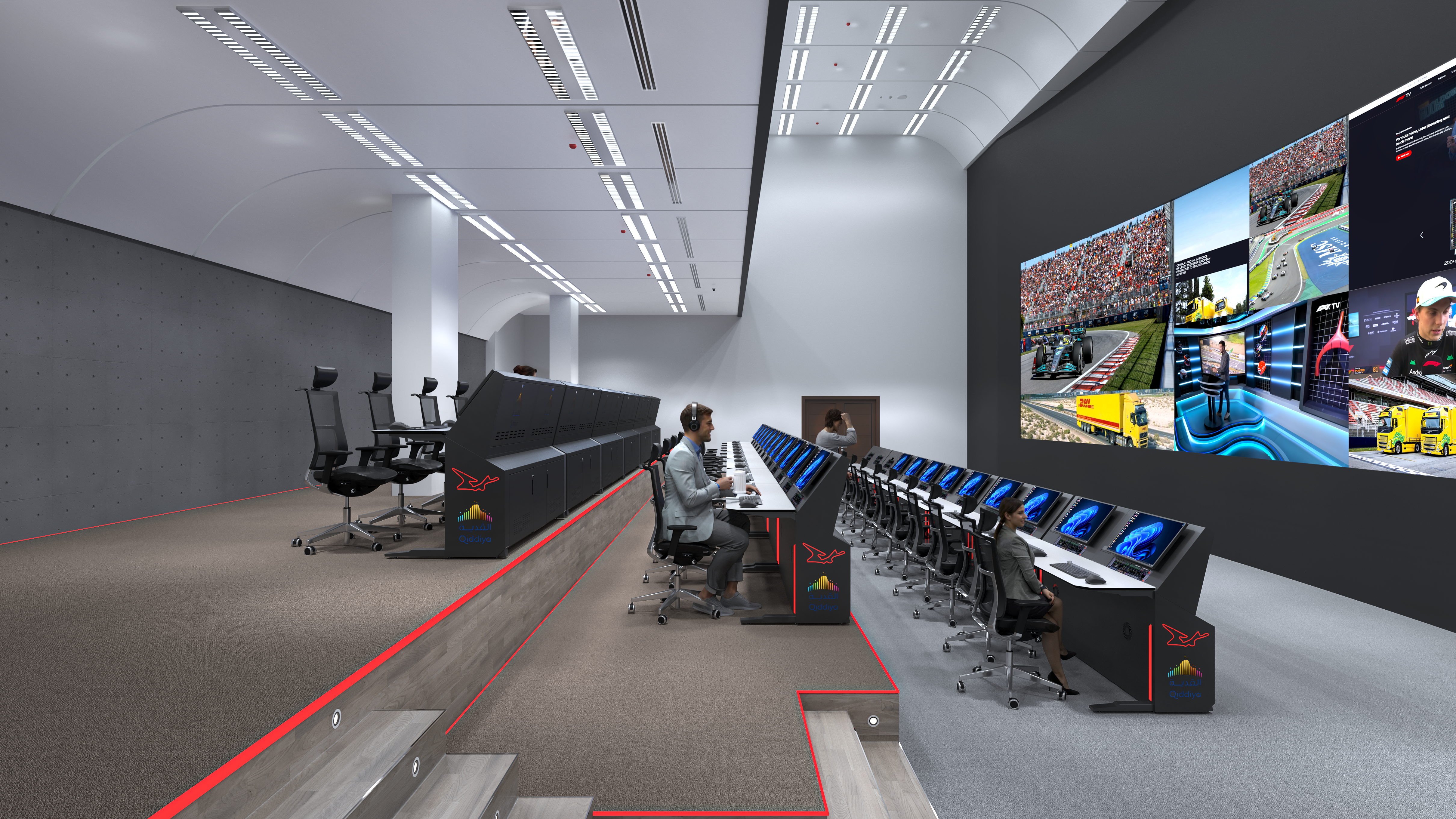
Why Office Desks Fail in Mission-Critical Control Rooms?
A console and a desk are solving completely different problems. A console has to house computers, multiple monitors, communication systems, sometimes emergency controls and support an operator who might be sitting there for twelve straight hours. A desk was never asked to do any of that.
The cracks show up fast: no real cable routing, no ventilation for enclosed equipment, one fixed height that suits nobody, and a layout that has operators twisting and hunching just to see their own screens properly.
None of this is cosmetic. Over a full shift, these small frictions compound into genuine fatigue and fatigue, far more often than a lack of training or skill, is what sits behind operator errors in high-stakes environments.
Ergonomic Design Built Around the Operator
Ergonomic consoles start from a completely different question: what does this person's body and attention need to hold up for twelve hours not eight?
That means:
- Monitors placed within a natural resting gaze, not tilted upward
- Surface heights and reach zones built around real operator dimensions
- Primary controls kept within comfortable arm's reach, never a stretch
It sounds like a small thing until you do the math. A monitor angled a few degrees wrong adds a bit of neck strain. Stretch that across twelve hours, and it becomes measurable fatigue, the kind that slows down how fast someone spots an anomaly, or how clearly they communicate the moment something goes wrong.
Height-Adjustable, Sit-Stand Consoles: Premium Feature or New Baseline?
Height-adjustable control room consoles have moved from a premium option to the most common specification for new-build and refurbished control rooms across the UAE and GCC in 2025-26. The reasoning holds up under research too. Studies on alternating between sitting and standing show measurable improvements in alertness and reduced mental fatigue compared to staying seated through an entire shift, exactly the pattern control room operators deal with daily.
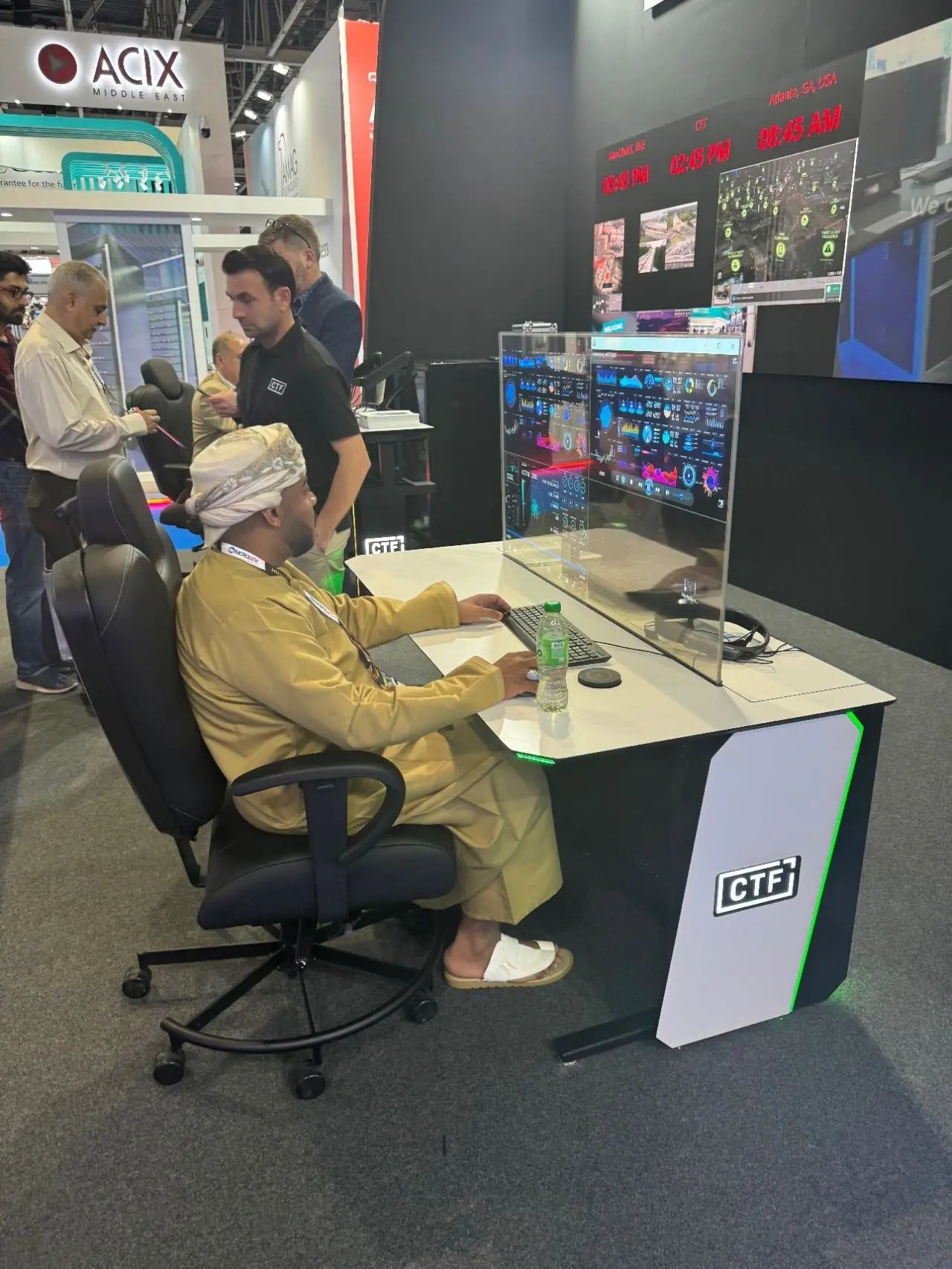
A proper sit-stand console does more than just move up and down. Cable management needs to travel with the desk as it rises, monitor arms need to adjust proportionally rather than staying fixed while the surface moves, and electric height adjustment with one-touch presets is the only practical option, manual cranks simply don't belong in a live operational environment. For a deeper look at why this shift has become close to non-negotiable in mission-critical rooms, our piece on why sit-stand control room consoles are essential covers the research and real deployment patterns in more detail.
Cable Management and Equipment Integration
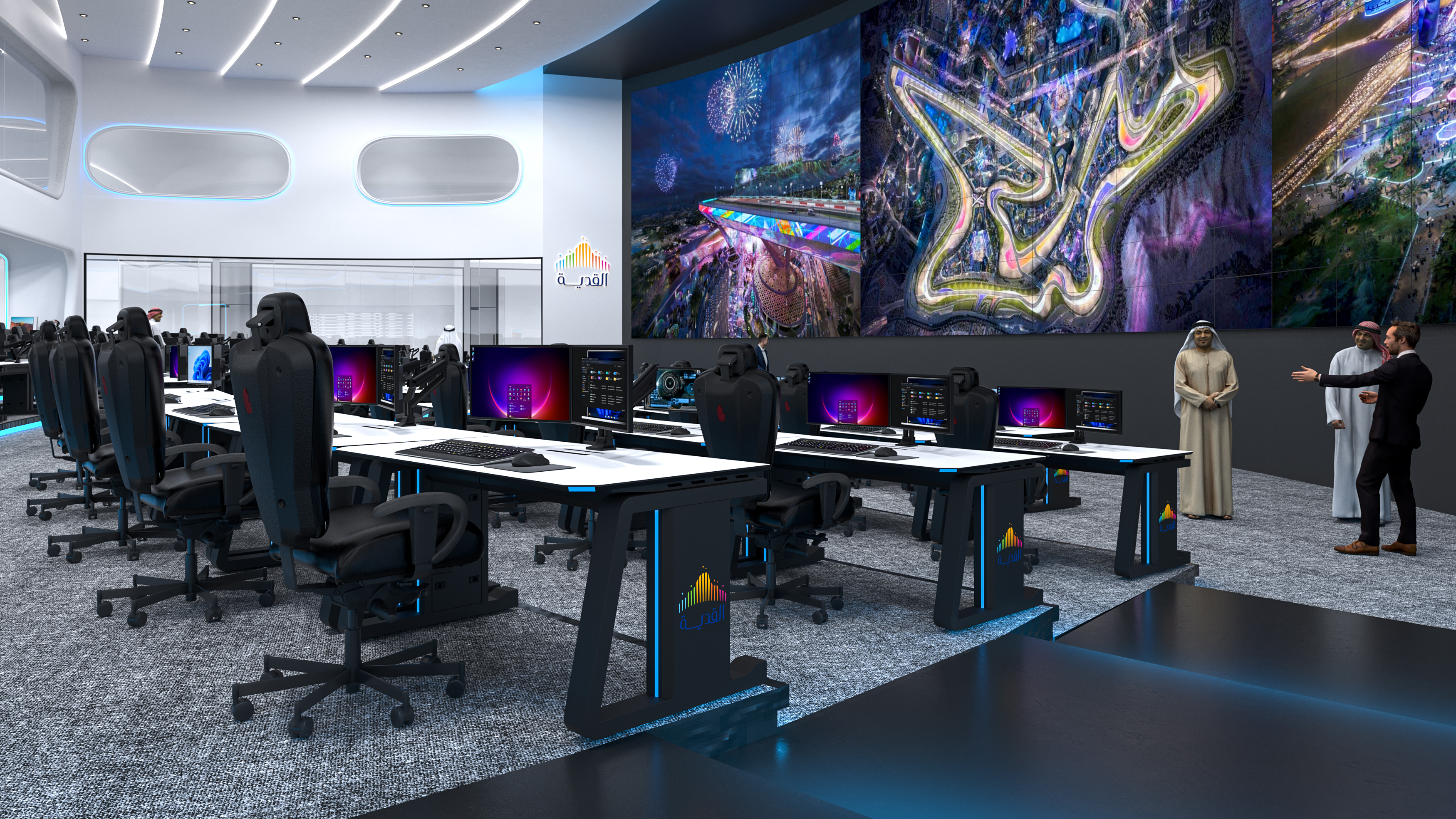
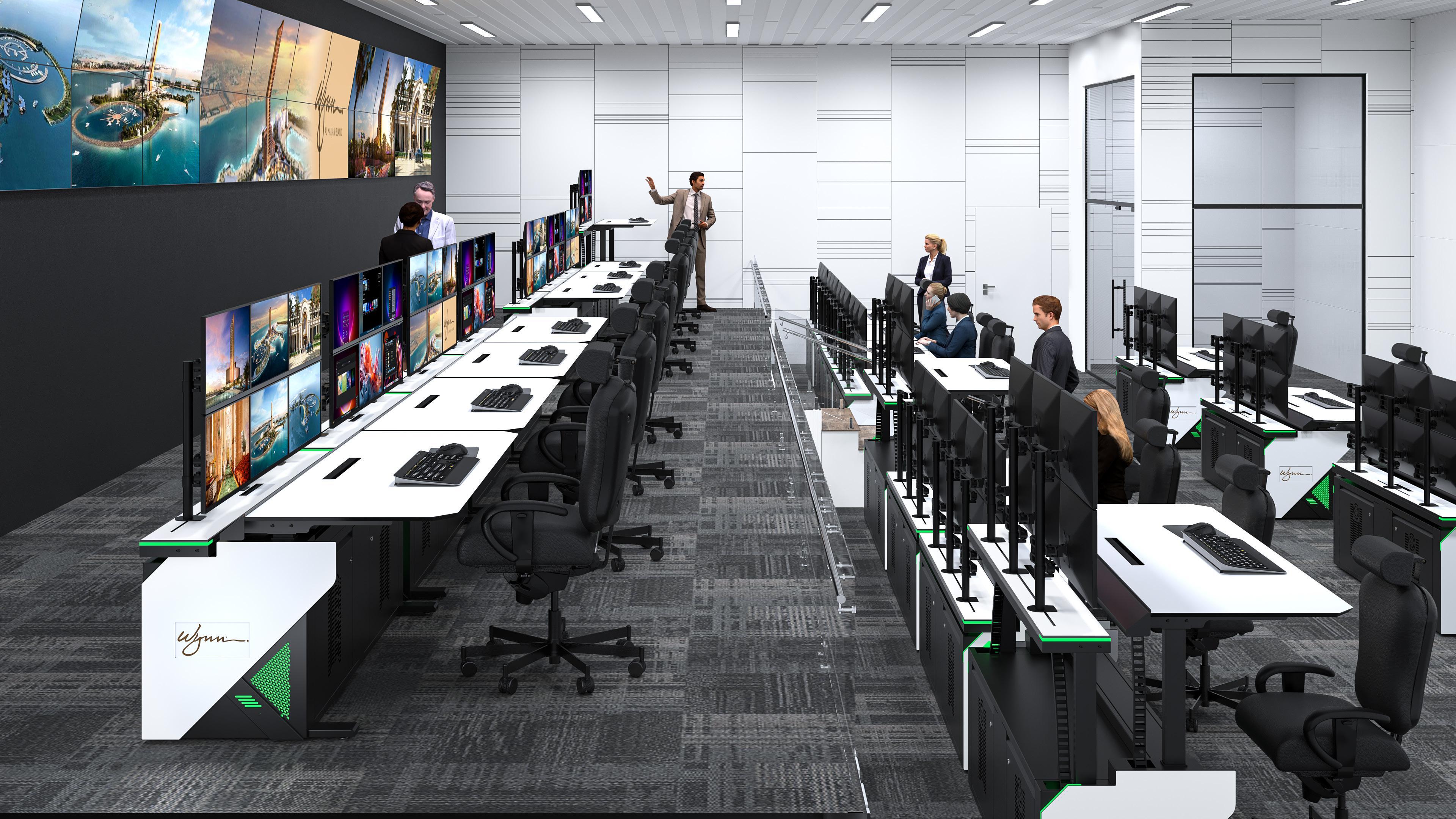
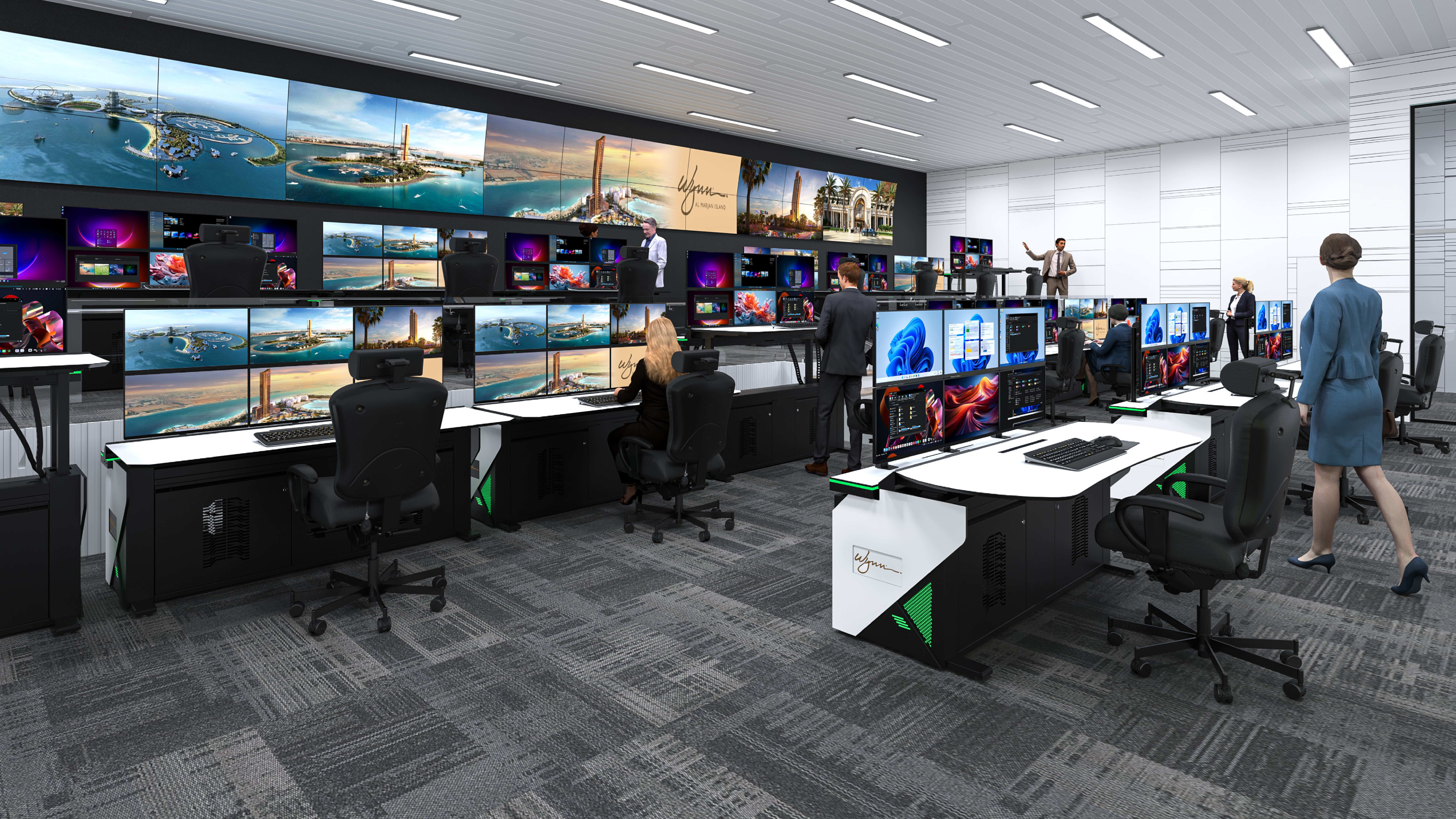
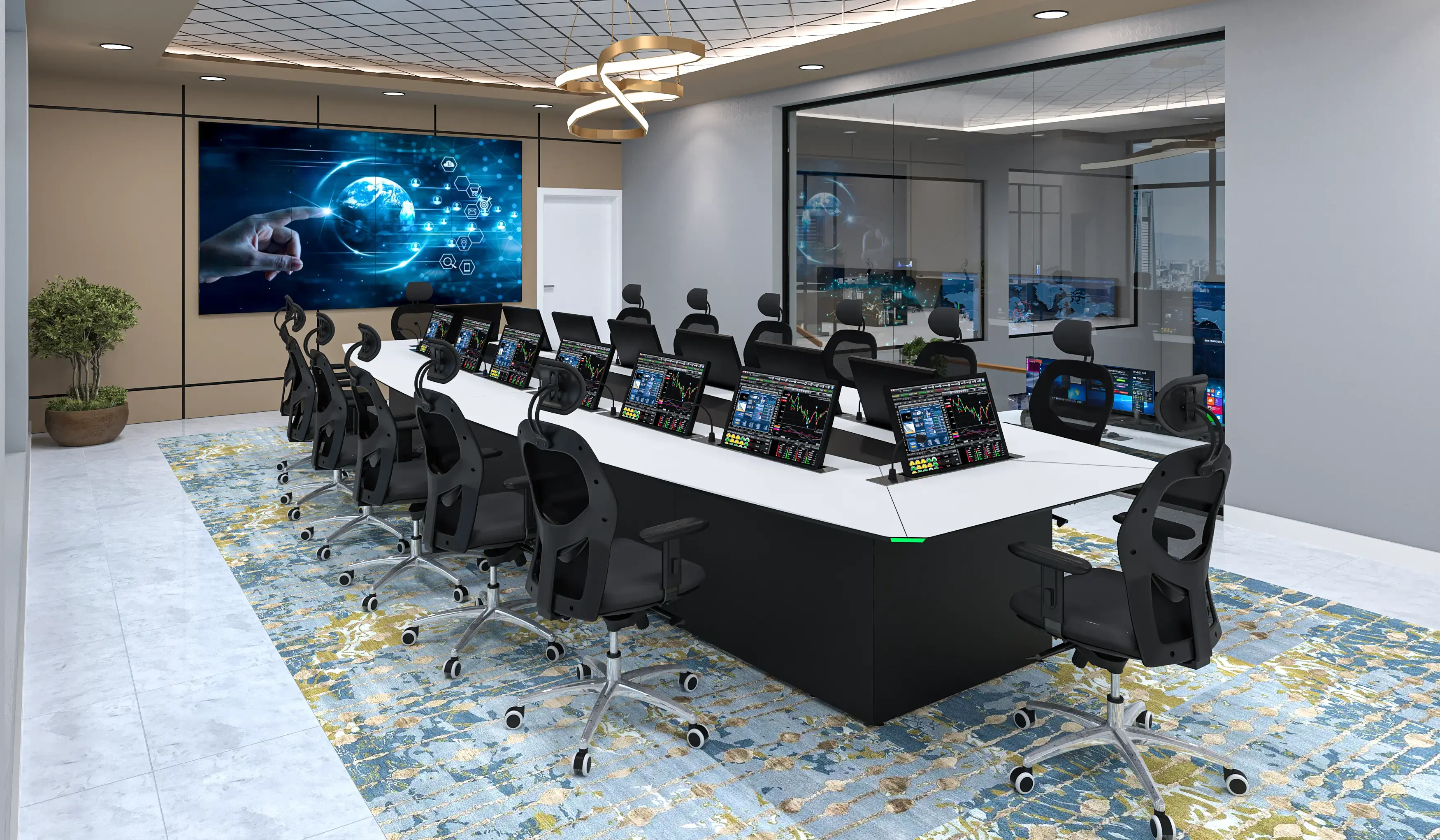
Each control centre typically runs different sets of hardware and systems ranging from SCADA terminals, radio communications, KVM switching facilities, and video wall controllers to different types of monitors; the console layout must reflect exactly the workflow peculiar to that facility rather than being a generic template. A custom console design ensures that you will have the equipment bay, the number of monitors, and the surface configuration built around the equipment that your operators will use in fact rather than furniture being modified to fit an arrangement never envisioned at the time of the production.
Well-made custom consoles separate power and signal cables into their own dedicated channels, keep vertical cable management accessible and even allow for the changing height of sit-stand surfaces and provide equipment serviceability without dismantling the system completely. It is not a showpiece, but it is exactly such subtle design elements that differentiate it from a piece of furniture which can be operated for years without failure or a piece of furniture that can be turned into maintenance problems very quickly during the first year.
ISO 11064 Compliance: The Framework Behind Every Custom Console
ISO 11064 control room design is the international standard for ergonomic control centre design, covering everything from workstation dimensions and screen positioning to room layout, lighting, and acoustics. Across the UAE and GCC, it's become the reference framework that regulators and project specifications point to for critical facilities, and for good reason: it exists specifically to reduce the operator error and fatigue that come from poorly designed operator workstations.
Compliance touches details most people wouldn't think to question until they've caused a problem, primary displays positioned within roughly 15 degrees below an operator's horizontal line of sight, minimum clearance and reach zones for every operator position, and acoustic separation in noise-sensitive environments like oil and gas control rooms. Our detailed breakdown of why ISO 11064 compliance matters in control room design walks through exactly what the standard requires and why it's treated as a design framework rather than an optional certification.
No Two Control Rooms Are the Same
Airports
Airport operations centers require coordinated, combined workstations where flight monitoring, communications systems, multi-team coordination in real time take place usually within a big room, using shared video walls and multiple-row tiered consoles to ensure the visual clarity of the view.
Utilities
Facilities operating district cooling, power, and water services that require round-the-clock SCADA-based monitoring are characterized by high equipment load and desks that can carry out the required task despite having to fit an extremely tightly packed cabling without at the same time being deprived of the right airflow to avoid overheating the hardware.
Security & Surveillance
24/7 monitoring centres need console layouts built around screen visibility and communication equipment first, with sit-stand capability that lets operators manage fatigue without ever stepping away from active feeds.
Government & Defence
These environments demand secure, durable consoles built for command and emergency response, often with acoustic and access considerations that go beyond a standard commercial specification.
Oil & Gas
High cognitive load combined with genuine physical fatigue in these control rooms, and ergonomic flexibility, along with acoustic separation between stations, directly reduces the chance of errors during high-pressure periods.
Transportation
Metro lines, highway networks, and logistics control centres need console configurations flexible enough to adapt across different operators and shift patterns, since the same station may see several different people using it in a single day.
Our full breakdown of industry-specific control room solutions covers the detailed requirements for each of these sectors individually.
Designing for What Comes Next
A control room specified for today's headcount and equipment often looks different in three years. Modular console architecture, built to add, remove, or rearrange operator positions without reconstructing the room, significantly reduces the cost and disruption of future expansion. This matters particularly for growing utilities and infrastructure projects across the UAE, where operational scale tends to increase faster than the original room design accounted for.
So, Do You Actually Need a Custom Console?
A few signs it's time:
- You're designing a control room from scratch
- You're refurbishing a space where existing furniture can't handle new equipment density
- Your operator team has outgrown the original room layout
- You're facing a compliance requirement (ISO, SIRA, or another sectoral standard) that standard furniture simply won't meet
If any of that sounds familiar, the custom build is almost always the cheaper option in the long run, once you look past the sticker price.
The Bottom Line
A control room console isn't really a piece of furniture, it's a vital work equipment that influences the level of performance of a group of people when their moment of truth arises. Although the demand may be for command centre consoles, security operations furniture, or airport console systems, the fact is, a tailor-made control room console will be required to be delivered since it is not only the ergonomics of the furniture that will be considered but also how much equipment can be integrated, cable management, and meeting ISO 11064 requirements cannot be done later on a desk that was originally designed for an office.
For system integrators, facility managers, and government agencies who are specifying mission-critical rooms all over UAE, the console decision is a major choice that warrants the same level of detailed examination as the technology system on which it will provide a platform. Our full product range, covering the U Class, A Class, E Class, K Class, and ATC Class consoles, is built around exactly that principle.
Contact The CTF Team