news Is Your Control Room Ready for 24/7 Operations?

Is Your Control Room Ready for 24/7 Operations?

Why Does Control Room Design Matter?

Three Mile Island, 1979. Operators staring at dozens of conflicting alarms, ambiguous instrumentation, and no clear read on what the reactor was actually doing. By the time anyone diagnosed the real problem, the plant was already partway into a partial meltdown. The technology hadn't failed; the room had. Operators simply couldn't extract the right information fast enough from an environment that was fighting them the entire time.

That nuclear incident was almost 50 years ago; the essence of the lesson has not changed, though. The layout of a control room is not a furniture or cosmetics issue; it is, in fact, an operational decision of great importance. A wrong choice, and it is not only will the physical well-being of operators be compromised, but you will also have, in fact, set the stage for the errors that will happen at the worst moments.
airporthub

Control Rooms Aren't Ordinary Workspaces

From the outside, a control room operator job looks kinda calm, like a person sitting at a desk, staring at screens and doing nothing much. But really, what is going on is constant high-stakes thinking, not just “watching”, tracking several live data streams at the same time, coordinating with other teams, and staying sharp for the instant when something quietly turns from routine into urgent, and yeah, it often happens over 12 hours, and often at 3 am, too. Research on operator visual fatigue found that mental workload during actual control room work was rated significantly higher than participants had expected going in, with visual fatigue and blurred vision showing up as measurable, common complaints, not rare exceptions.

This is exactly why treating a control room like a standard office- generic desks, whatever lighting was already installed, standard acoustics- misses the point entirely. The room isn't incidental to the work. It's part of the system.

The Real Cost of Poor Control Room Design

A few well-documented incidents make the stakes concrete rather than abstract:

  • Three Mile Island (1979) - operators facing dozens of conflicting alarms and unclear instrumentation, a confusion that directly delayed corrective action during a developing crisis

  • Piper Alpha (1988) - one of the deadliest offshore disasters on record, where miscommunication during shift handover led to unsafe equipment being reactivated, a failure rooted as much in room and process design as in any single individual's mistake

  • Ongoing grid and process industry research - a PNNL survey of electric grid control room operators found operator inexperience, high mental workload, and fatigue to be the most consistently reported vulnerabilities during a shift, not equipment failure

None of these are stories about careless individuals. They're stories about environments that made it harder than it needed to be for capable people to do their jobs well.

What Good Control Room Design Actually Includes?

This is where ISO 11064, the international standard for ergonomic control room design, kind of earns its place as the reference point most serious control room projects end up working from. It’s a genuinely practical, operator-focused framework, not some set of abstract guidelines, and it touches a few core areas that are often the first things people try to get right

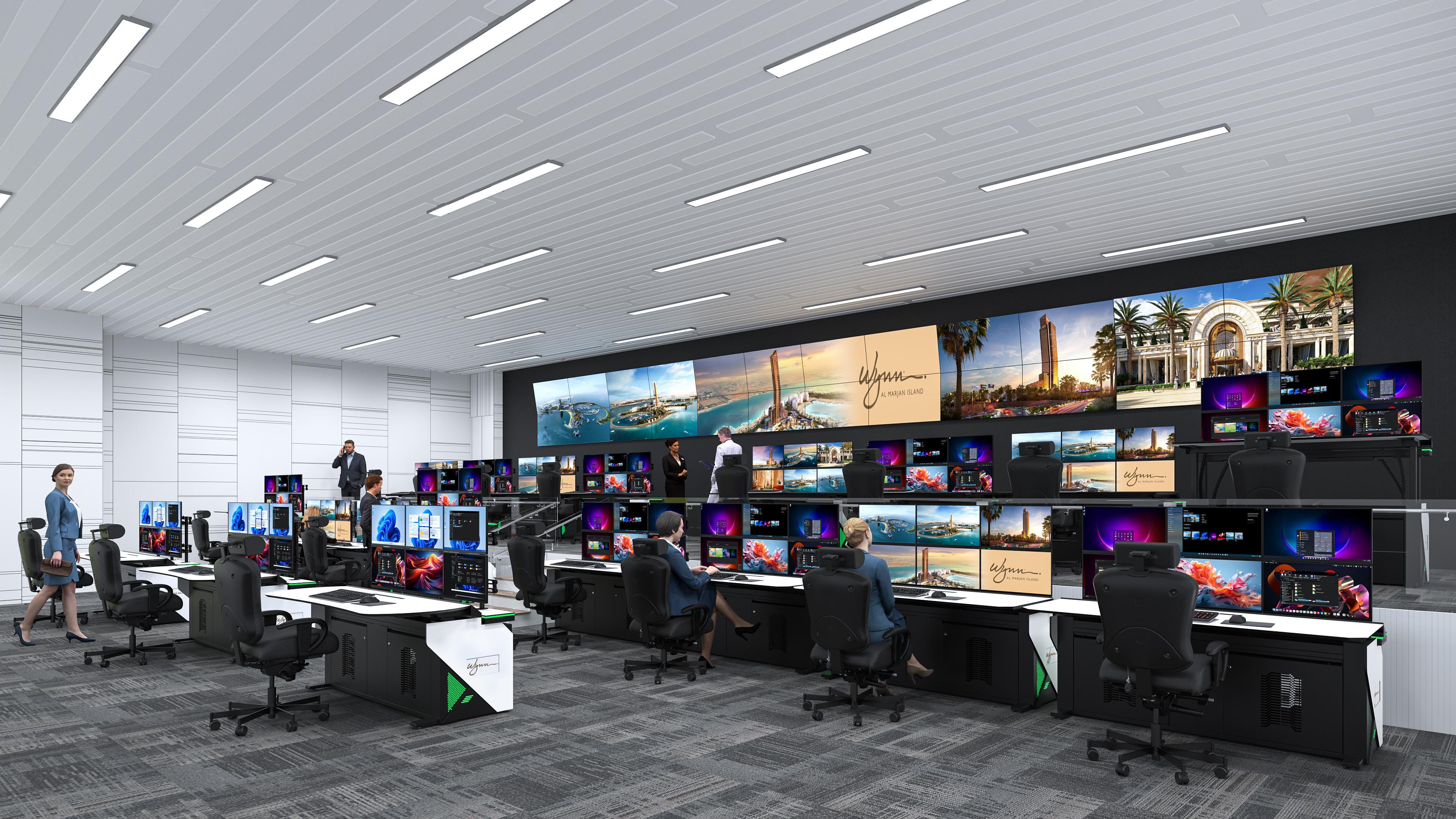
  • Sightlines and viewing angles - every screen positioned so operators can see it without neck strain or awkward posture held for hours at a time

  • Console dimensions and reach zones - frequently used controls kept within easy, natural reach, not buried behind a stretch or a swivel

  • Acoustic design - background noise and echo kept low enough that concentration doesn't erode over a long shift

  • Lighting - calibrated specifically to reduce glare and visual strain during extended screen-based work, increasingly including automated color temperature shifts that mirror natural circadian rhythms for night shifts

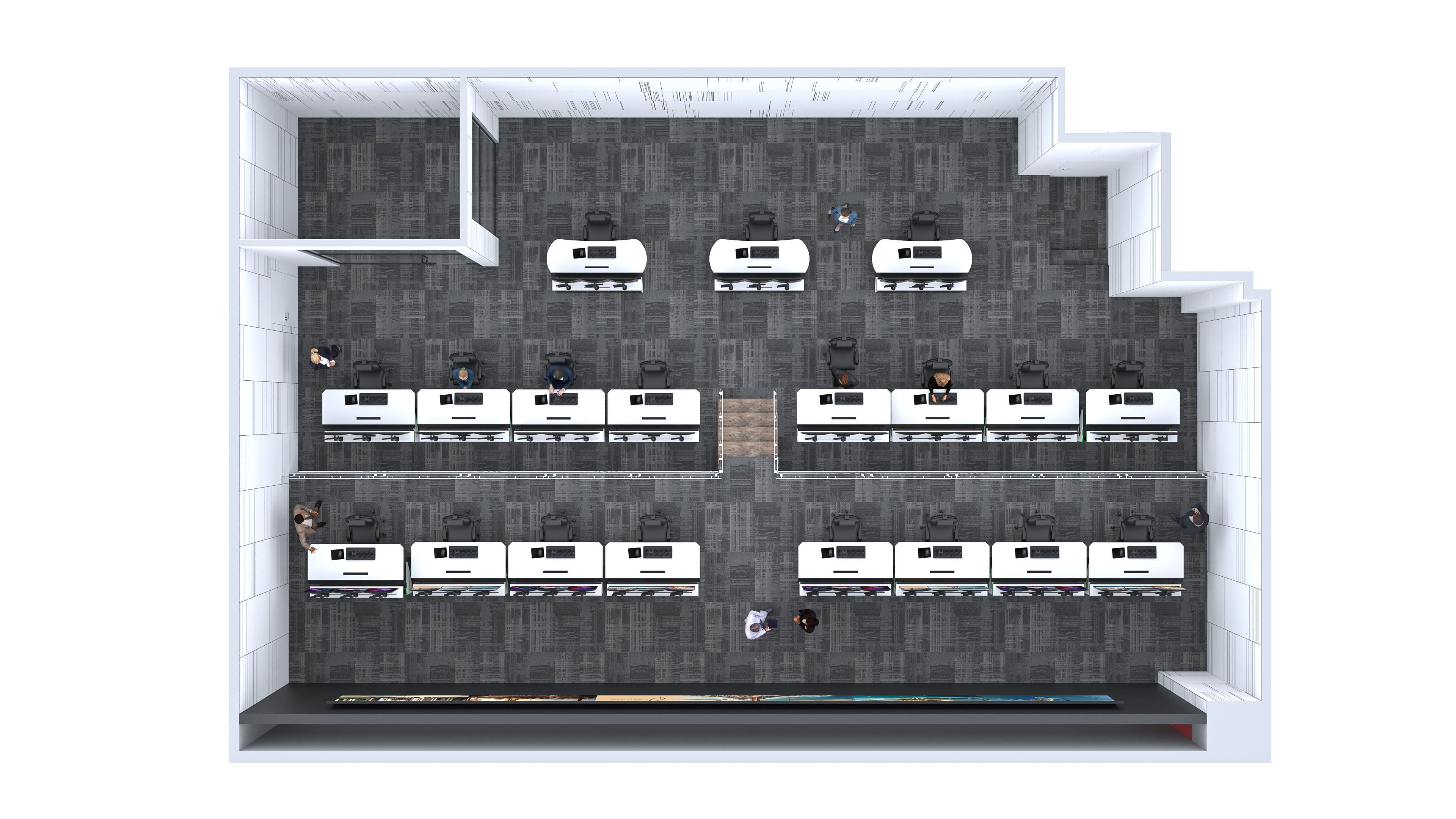
  • Spatial workflow - room layout that supports both focused individual monitoring and fast, clear team coordination during an actual incident

Recent research backs up just how measurable the impact of getting this right actually is. Optimized lighting paired with adjustable sit-stand consoles has been shown to increase operator alertness by as much as 15% during 12-hour night shifts, a genuinely significant number when the entire point of the role is staying alert enough to catch what matters.

The Console: Where Design Decisions Become Physical

All of this ergonomic theory eventually comes down to one physical object the operator sits at for their entire shift, the console. This is exactly where custom console design either delivers on everything ISO 11064 calls for, or quietly undermines it.

There are only a few distinct features that will make a difference when it comes to deciding if one is using a console designed for round-the-clock actual work compared to one that merely has the look of one.

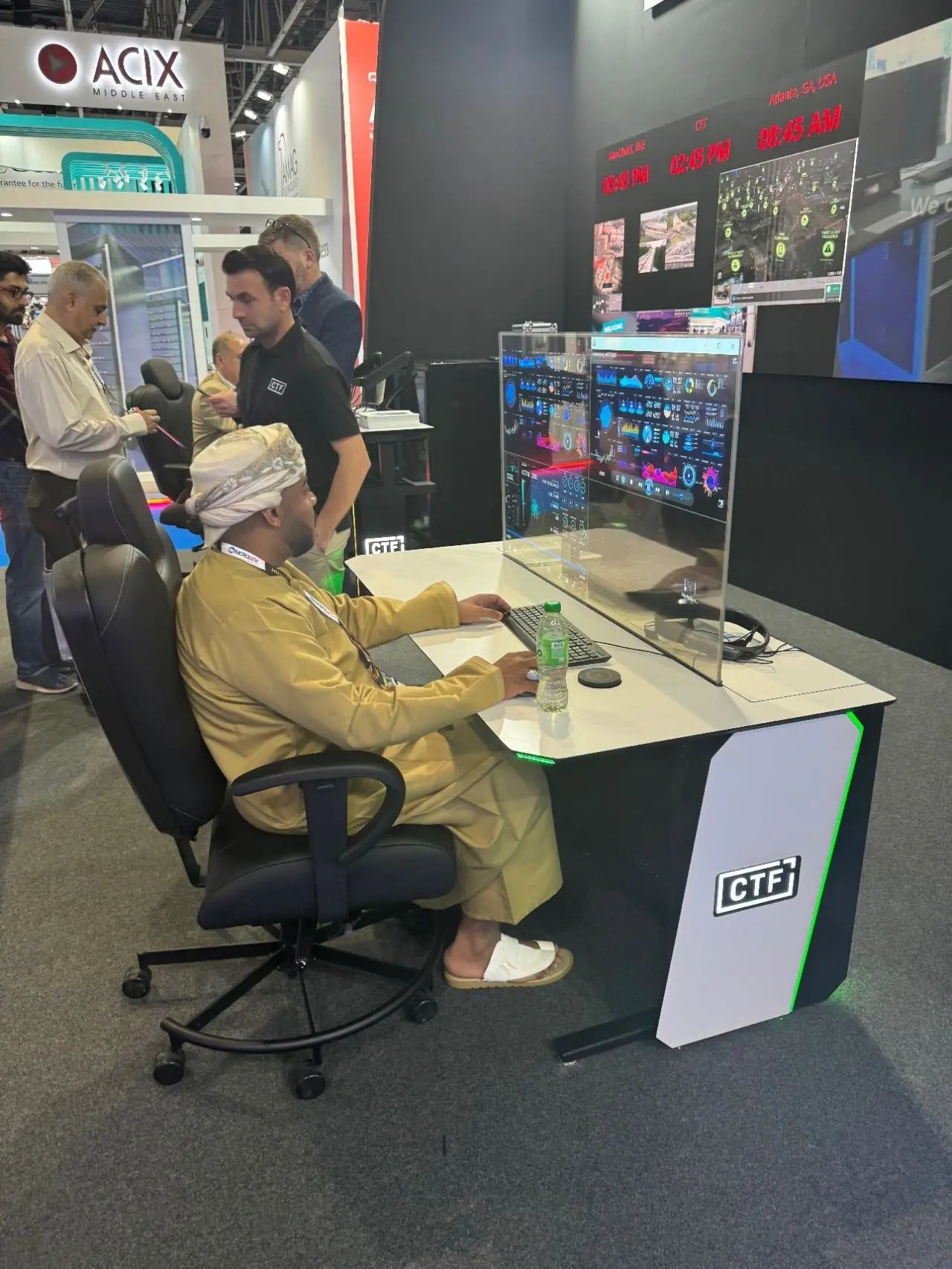
  • Height-adjustable control room consoles let operators shift between sitting and standing during a long shift. That, in turn, directly tackles postural fatigue that quietly builds up at a fixed-height desk after 12 hours, day after day.

  • Proper cable management, built right into the console structure, so a multi-monitor, multi-system configuration doesn’t slowly turn into a tangled hazard every time you need to upgrade or swap hardware around

  • Modular scalability means the console can adapt as technology and operational requirements change, without a full room rebuild every time a new system gets added

  • Genuine mission-critical furniture construction holds up to constant use, not occasional office wear, since control room consoles rarely get a break

Real-life examples confirm this without a doubt. A perfect example is when chemical giant BASF had to find ways to counteract ergonomic stresses in one of their chemical manufacturing plants in Louisiana when people had long monitoring duties. They solved the problem without introducing new software or hiring more staff. What they did was install operator consoles so that they met ergonomic requirements: height-adjustable consoles, the screen at a perfect viewing level and ergonomically designed seating. It was the physical interface that they addressed to posture, sight lines, and even the comfort of staying at one spot for a long time.

Common Control Room Design Mistakes

A handful of patterns show up repeatedly in control rooms that were never properly designed for the job:

  • Console furniture bought purely on cost, without ergonomic planning behind it
  • Monitor placement decided after furniture was already installed, locking operators into awkward viewing angles
  • Cable management treated as an afterthought, creating tangled setups that turn simple hardware swaps into half-day jobs
  • Acoustic treatment ignored entirely, leaving background noise to quietly erode concentration over a shift
  • Layouts that prioritize individual workstations over the genuine team coordination a real incident actually demands

Every one of these is avoidable, and every one chips away at the same thing, an operator's ability to stay sharp and effective for the length of an entire shift.

Why This Matters More for 24/7, Mission-Critical Operations?

The global control room design market is projected to grow at a CAGR of over 16% from 2026 onward, a clear signal that more industries- energy, utilities, transportation, security are recognizing this isn't a discretionary upgrade anymore. For operations running around the clock, where a missed alert or a delayed reaction genuinely has consequences, the room your team works in isn't a background detail. It's one of the most direct levers you have over how well the entire operation actually performs.
gccuae

Conclusion

Control room technical furniture procurement decisions are made once and enjoyed for more than a decade, and this is exactly the reason the mentioned mistakes cost so much when they do occur. Alone price, skipped Ergo studies, inadequate cable management, no area for expansion, improper ventilation planning, lack of ISO compliance, short warranties, and supplier with no experience, they follow the same path: they seem to be savings when one of these things gets bought and become expenses in hindsight, which more often than not turn out to be the most terrible moments.

Consider workstation choice for control rooms as a lifetime decision right from the beginning, and most of these errors will no longer be risks at all.

1705504277456
1705504278002
1705590713886
1705046058571
1705504278453
1705590716289