The Importance of Heat Management in Control Room Furniture
Modern control rooms accommodate multiple monitors, computers, servers, communication devices and other electronic equipment that operate for extended periods. While these systems support critical operations, they also generate heat that needs to be managed effectively.
Without proper ventilation and airflow, heat can accumulate around electronic equipment, potentially affecting performance, increasing cooling demands and complicating maintenance.
This makes heat management an important consideration when designing control room furniture. For organisations operating 24/7 facilities across Dubai, UAE, GCC and Saudi Arabia, well-engineered control room consoles can help accommodate equipment while supporting effective airflow and long-term operational reliability.
Why Is Heat Management Important in Control Rooms?
Control room equipment generates heat during operation. When several devices are installed within enclosed workstations or equipment compartments, the accumulated heat needs an appropriate path to dissipate.
Poor heat management can contribute to:
- Equipment overheating: Excessive temperatures may affect the performance and reliability of electronic components.
- Reduced equipment lifespan: Sustained exposure to temperatures beyond recommended operating limits can accelerate component deterioration.
- Maintenance challenges: Poorly ventilated compartments can make equipment servicing and temperature management more difficult.
- Increased cooling requirements: Additional heat loads can place greater demands on the room's cooling infrastructure.
In environments such as security operations centres, power plants, airports and utility control rooms, equipment reliability is particularly important because monitoring systems often need to operate continuously.
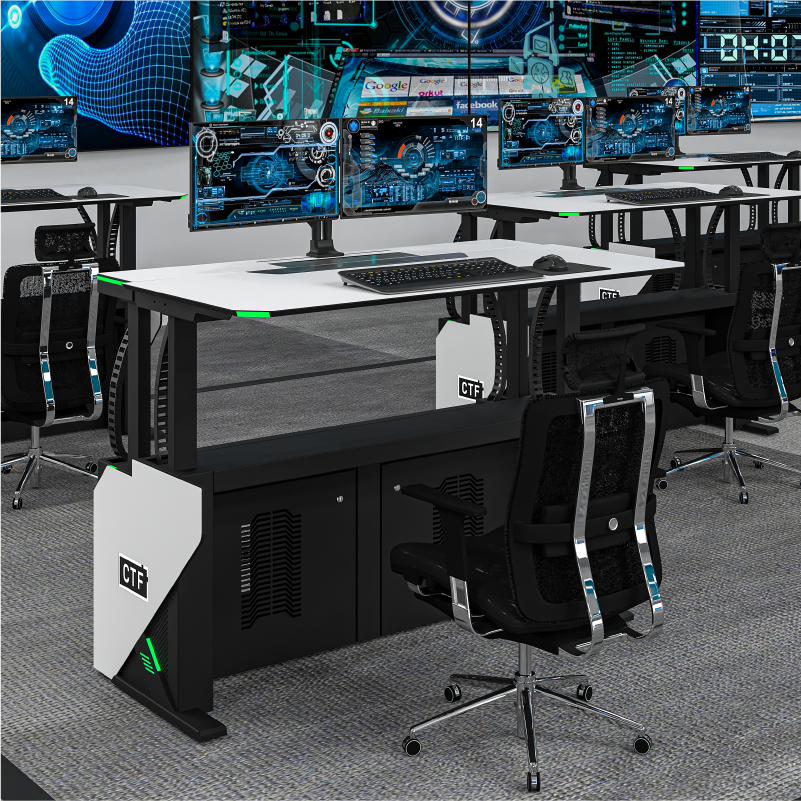
4 Design Considerations for Better Heat Management
Effective heat management starts during the console design stage. Here are four important factors to consider.
1. Plan Equipment Placement Carefully
Where equipment is positioned inside a console can influence how effectively heat dissipates.
Avoid overcrowding equipment compartments. Consider the dimensions of computers, processors, power supplies and other electronic devices before finalising the workstation design.
Allow sufficient clearance around equipment in accordance with manufacturer ventilation requirements. This also makes components easier to access during maintenance.
2. Incorporate Effective Ventilation
Ventilation is one of the most important features of technical furniture used in control rooms.
Depending on equipment requirements, console designs may incorporate:
- Ventilation openings and airflow pathways
- Perforated panels for improved air circulation
- Integrated fans where required
- Dedicated equipment compartments
- Accessible panels for maintenance
The objective is to prevent unnecessary heat accumulation while supporting the equipment's recommended operating temperatures.
3. Consider Cable Management and Internal Organisation
A cluttered equipment compartment can restrict airflow and make maintenance difficult.
Integrated cable management helps organise power and data connections, reduces unnecessary cable obstruction and provides easier access to installed equipment.
Well-planned internal layouts also make it simpler for technical teams to identify connections, replace components and carry out routine servicing.
4. Coordinate Console Design with Room Cooling
Console ventilation and room air conditioning should not be considered separately.
The overall control room cooling strategy must account for the heat generated by displays, computers, servers, lighting and other equipment.
When designing control room furniture, consider how console placement interacts with the room's air conditioning, supply and return air pathways. Equipment-specific thermal requirements should guide the final design.
What Should You Look for in Control Room Furniture?
When selecting control room consoles and technical furniture, evaluate more than appearance and workstation dimensions.
Consider these practical requirements:
- Adequate ventilation provisions for installed equipment
- Suitable materials and construction for continuous use
- Accessible equipment compartments
- Integrated cable management
- Space for future equipment additions
- Compatibility with the facility's cooling infrastructure
These considerations are particularly relevant for mission-critical facilities across the GCC, where control rooms may accommodate extensive monitoring and communication systems.
.png)
Why Custom Control Room Consoles Make a Difference?
Every control room has different equipment requirements. A security surveillance centre may have different ventilation needs from a power plant monitoring facility or an airport operations centre.
Custom-designed control room solutions allow organisations to plan console dimensions, equipment compartments, ventilation provisions and cable routing around their specific operational requirements.
CTF Consoles provides specialised control room consoles and technical furniture for mission-critical environments. Its product range supports organisations looking for workstation configurations that accommodate technical equipment, operator requirements and long-term operational needs.
For projects across Dubai, UAE, GCC and KSA, explore the CTF Consoles product range when planning your next control room installation or upgrade.
Conclusion
Heat management is an essential part of designing reliable control room workstations. Proper equipment placement, ventilation, cable organisation and coordination with room cooling systems can help manage heat accumulation and support equipment reliability.
By considering these factors from the beginning, organisations can create better-organised control rooms with technical furniture designed around the demands of continuous operations.
A well-designed control room console should do more than accommodate equipment. It should support the environment in which that equipment operates.
Contact The CTF Team