news Control Room Console Procurement Mistakes to Avoid

Control Room Console Procurement Mistakes to Avoid

Critical Mistakes to Avoid When Procuring Control Room Consoles

Ask any facilities manager who's replaced a control room console eighteen months into its expected lifespan, and you'll hear some version of the same story: it looked fine on the spec sheet, it was the cheapest quote on the table, and nobody thought to ask what happens after year two. Control room console procurement isn't furniture buying, it's infrastructure planning, and treating it like the former is exactly how a facility ends up paying twice for something that should have lasted fifteen years the first time around.

In this guide, we'll walk through the eight procurement mistakes that show up again and again in control room furniture procurement, from price-only decisions and skipped ergonomics to ISO compliance gaps and thin warranties, and close with a practical checklist you can actually use before signing off on a supplier. Consider it the control room console buying guide we wish more buyers had in hand before their last purchase.

airporthub

Why This Category Deserves More Scrutiny Than a Standard Furniture Purchase

A control room console isn't judged on how it looks in a showroom, it's judged on how it performs after 5,000 hours of continuous use, during an incident, with an operator who's four hours into a night shift and needs every second of their attention on the screen, not the desk. This applies just as much to command centre furniture in government and security environments as it does to industrial process rooms.

The right question at the procurement stage was never "what desk do we need," it's what workstation configuration keeps operators performing at their required accuracy level across the full duration of every shift, for the operational lifetime of the installation. Get that question wrong at the buying stage, and no amount of good intentions fixes it later. Most control room design mistakes trace back to exactly this point being skipped.

Mistake 1: Selecting Based on Price Alone

The upfront quote is only a small part of the total investment over a console's working life. Installation, maintenance, adjustment mechanism upkeep, surface replacement, and the cost of operator injury claims a properly specified console actually prevents all sit on the other side of that ledger, and they consistently favour the console that cost more on day one. A cheaper console that needs replacing in five years rather than lasting fifteen isn't actually cheaper, it's a bill that got deferred, not avoided.

Mistake 2: Overlooking Ergonomics

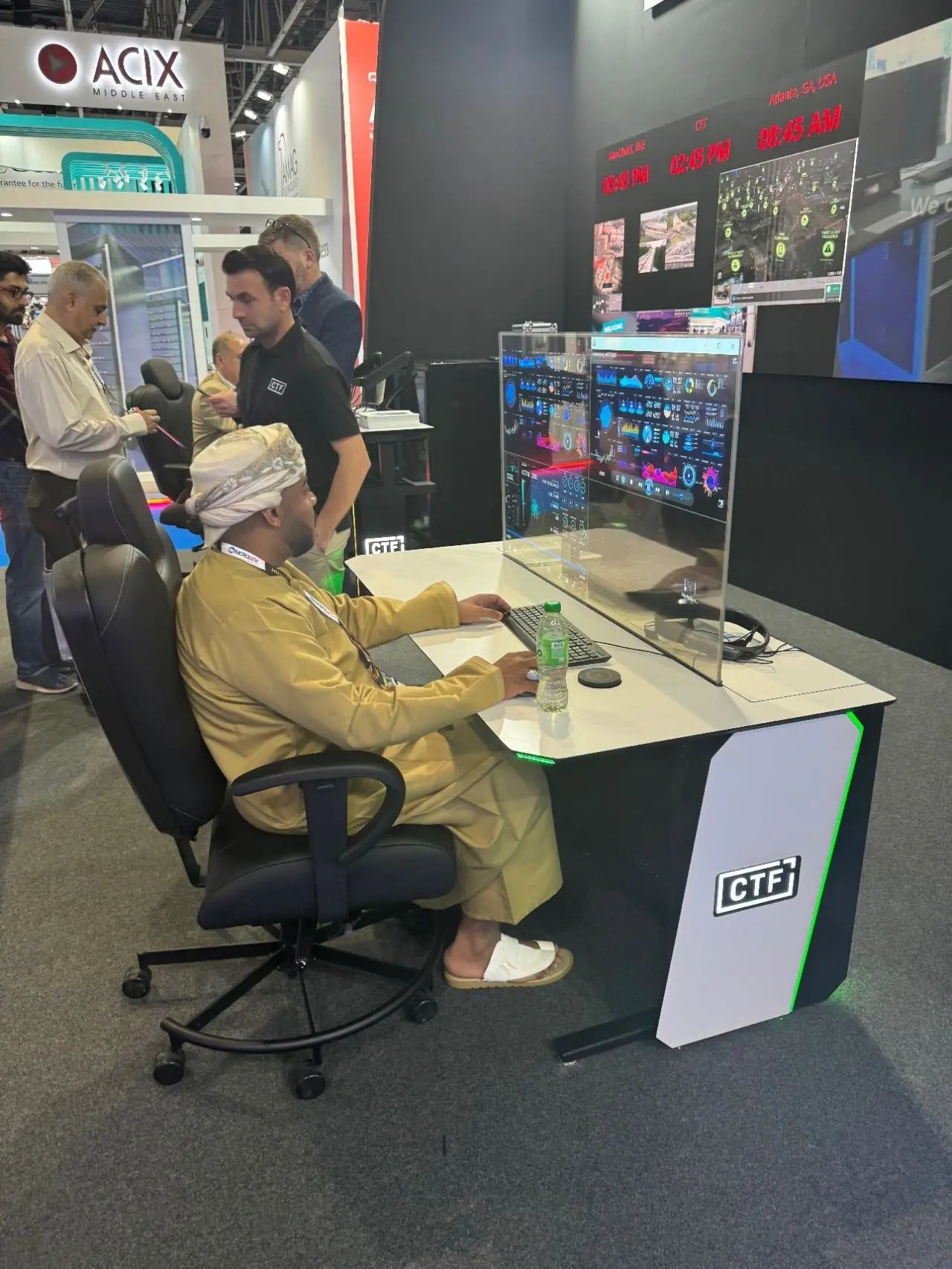
Standard office desks weren't designed for 24/7 monitoring environments, and using them anyway contributes directly to operator fatigue and the data silos that cause critical incidents to get missed. Ergonomic consoles aren't a comfort upgrade, they're a performance requirement. A 2011 study published in Applied Ergonomics measured response times and error rates across four-hour seated monitoring sessions compared against sessions with regular standing breaks, and operators who could alternate positions performed measurably better. Skipping proper monitor positioning, reach envelopes, and height adjustment at the procurement stage builds fatigue into the room from day one.

Mistake 3: Insufficient Cable Management

This is the detail that rarely shows up in a sales conversation but shows up constantly in maintenance callouts. Poor cable routing creates trip hazards, blocks airflow around equipment that needs to stay cool, and turns a routine repair into a genuine headache when a technician has to trace one cable through a tangle of others during an active incident. Compartmentalised raceways that separate power, signal, and data cabling aren't a nice-to-have specification line, they're what keeps a console serviceable five years into its life instead of becoming something nobody wants to open up.

Mistake 4: Ignoring Future Expansion

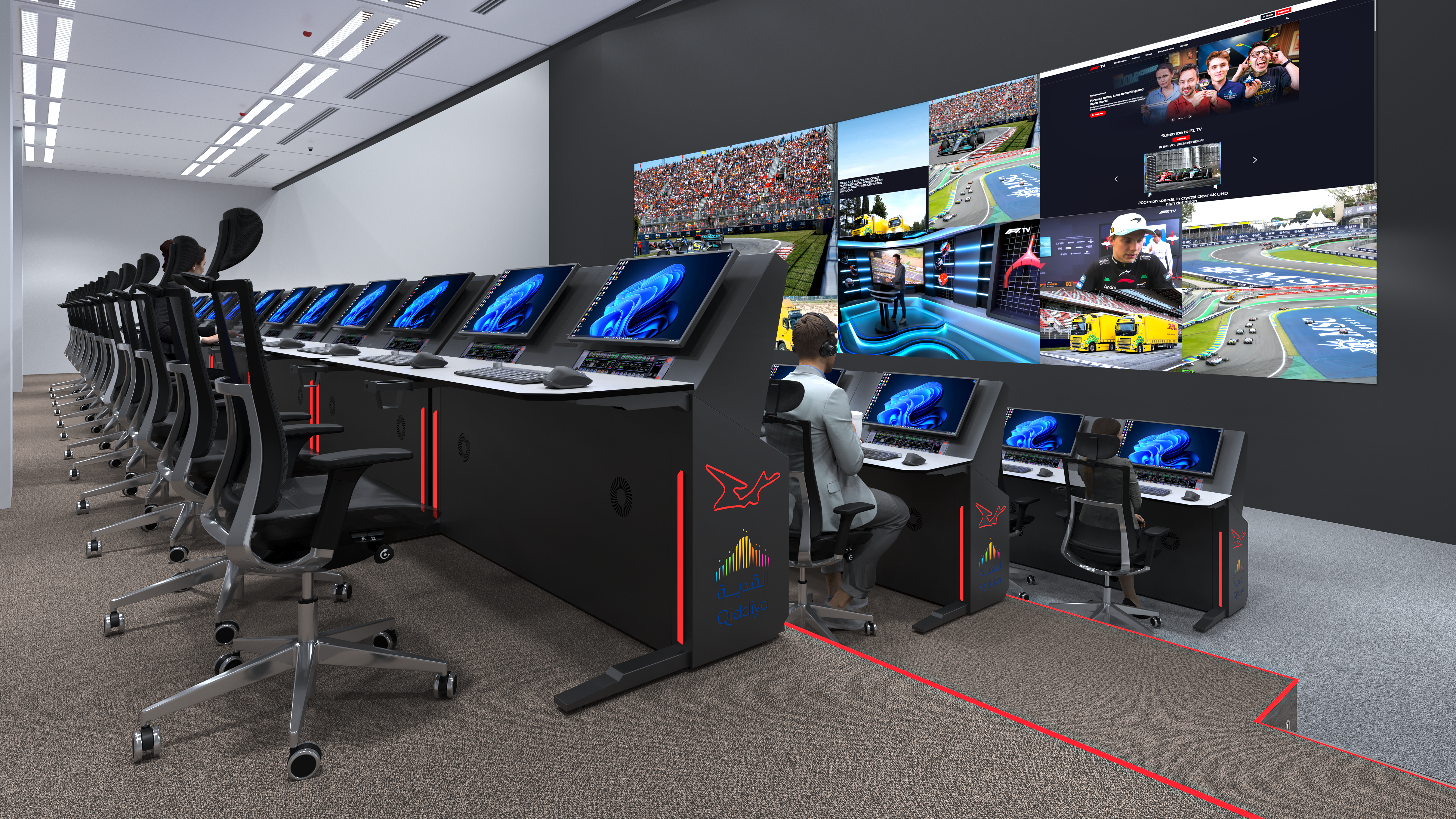
A control room specified for today's headcount and equipment often looks completely different in three years. Treating every component as a fixed, one-time purchase, consoles from one supplier, equipment bays sized for exactly what's needed today and nothing more, is one of the most common and costly procurement mistakes in this category. Modular console architecture that can add, remove, or reconfigure operator positions without reconstructing the room significantly reduces the cost and disruption of the expansion that's coming whether it's planned for or not.

Mistake 5: Poor Equipment Ventilation

Control room consoles frequently sit adjacent to heavy processing equipment, servers, PLC terminals, KVM switches, that generate real heat inside an enclosed console body. Specifying a console without proper ventilation planning means that equipment runs hotter than it should, degrades faster than it should, and fails more often than it needs to. This mistake rarely shows up on a spec sheet comparison, but it shows up reliably in equipment replacement schedules a few years later.

Mistake 6: Lack of ISO Compliance

Control rooms in process environments, utilities, transportation, government, oil and gas, are increasingly classified under ISO 11064, the international standard for ergonomic control centre design. Skipping this at procurement stage isn't just a documentation gap, it means monitor positioning, reach zones, and surface heights were never actually validated against the standard built specifically to reduce operator error and fatigue.

For SCADA integrators and consultants producing project specifications, ISO 11064 consoles simplify the ergonomics section of the documentation considerably, and for end users, it's the difference between furniture that was designed for this job and furniture that happened to end up doing it. Our breakdown of why ISO 11064 compliance matters in control room design covers exactly what the standard requires in more depth.

Mistake 7: Inadequate Warranty

A warranty is really a supplier's own confidence in their build quality, stated in writing. A short or vague warranty on structural components, adjustment mechanisms, or surface finishes is worth reading as a signal, not just fine print to skim past. Mission critical consoles are expected to run for 15-20 years as part of a facility's broader asset lifecycle, and a warranty that doesn't reflect that expectation usually means the manufacturer doesn't expect the console to last that long either.

Mistake 8: Choosing Suppliers Without Mission-Critical Experience

General office furniture manufacturers and genuine control room console specialists are not interchangeable, even when their catalogues look similar at a glance. A supplier without a track record in mission-critical environments, government, utilities, aviation, security operations, hasn't been tested against the specific demands those environments create: continuous operation, plant-adjacent conditions, strict ergonomic compliance, and equipment integration that goes well beyond a power socket and a cable tray.

Ask directly for reference projects in your specific sector before assuming a general furniture supplier can simply adapt.

Practical Procurement Checklist

For consultants, system integrators, and end users evaluating console suppliers, work through this before signing anything:

  • Total cost of ownership calculated across the console's full expected lifespan, not just the purchase price
  • ISO 11064 compliance confirmed and documented, not just claimed verbally
  • Cable management specified as compartmentalised raceways, separating power, signal, and data
  • Modular architecture confirmed for future expansion without a full room rebuild
  • Ventilation planning reviewed against the specific equipment the console will house
  • Warranty terms compared explicitly against the console's expected 15-20 year service life
  • Supplier reference projects requested from your specific sector, not a general portfolio
  • Operator input included in the selection process, not just facilities management sign-off

Our full product range and industry-specific solutions are built around exactly these standards, since a console that fails on any one of these points ends up costing more than it saved.

gccuae

Conclusion

Control room technical furniture procurement decisions are made once and enjoyed for more than a decade, and this is exactly the reason the mentioned mistakes cost so much when they do occur. Alone price, skipped Ergo studies, inadequate cable management, no area for expansion, improper ventilation planning, lack of ISO compliance, short warranties, and supplier with no experience, they follow the same path: they seem to be savings when one of these things gets bought and become expenses in hindsight, which more often than not turn out to be the most terrible moments.

Consider workstation choice for control rooms as a lifetime decision right from the beginning, and most of these errors will no longer be risks at all.

1705504277456
1705504278002
1705590713886
1705046058571
1705504278453
1705590716289