news Airport Control Room Design & ATC Consoles | CTF Consoles

Airport Control Room Design & ATC Consoles | CTF Consoles

Control Room Design for Airport Operations and Air Traffic Monitoring

There are very few working environments in the world where the margin for error is as small as it is in an airport control room.

All aviation activities including aircraft movement through airspace and runway operations and gate operations and security alerts are managed by personnel who operate workstations to process live information and make safety-related decisions. The stakes don't get much higher than that.

And yet, the physical environment those people work in, the consoles, the layouts, the ergonomics, often gets less attention than the technology sitting on top of it. That's a mistake. Because in a 24/7 high-pressure operation like airport management or air traffic control, the workspace isn't background detail. It's operational infrastructure.
airporthub

What Airport Control Rooms Are Actually Managing

Before talking about design, it's worth understanding the scale of what these environments handle.

Modern airports need their operations control centres to oversee multiple systems which operate together with provided security for their controlled spaces. The various components of air traffic operations include air traffic movements, ground handling coordination, passenger flow, security screening processes, baggage systems operations, weather conditions monitoring, emergency response capability development. The system maintains continuous functions which run without any breaks throughout its operation.

According to EUROCONTROL European air traffic controllers handle more than 30,000 flights during their most active operational periods. The Gulf region experiences complicated aviation operations because its aviation growth rate surpasses the worldwide average. The operational control system at Dubai International handles more than 85 million passengers per year which makes it one of the most challenging systems in the world to operate.

The people managing these operations need workstations that match that level of demand. Not approximately. Precisely.

Why Standard Furniture Simply Doesn't Work Here

This is a question worth asking directly: why can't an airport operations centre just use high-quality commercial office furniture?

The answer comes down to what 24/7 continuous operation actually requires, and how far that is from what standard furniture is designed to deliver.

  • Shift patterns that never stop. The airport control rooms maintain continuous operations throughout the entire year. The furniture which meets basic operational needs for an eight-hour workday will experience both physical and ergonomic damage when used by workers during continuous operational periods across multiple shifts.
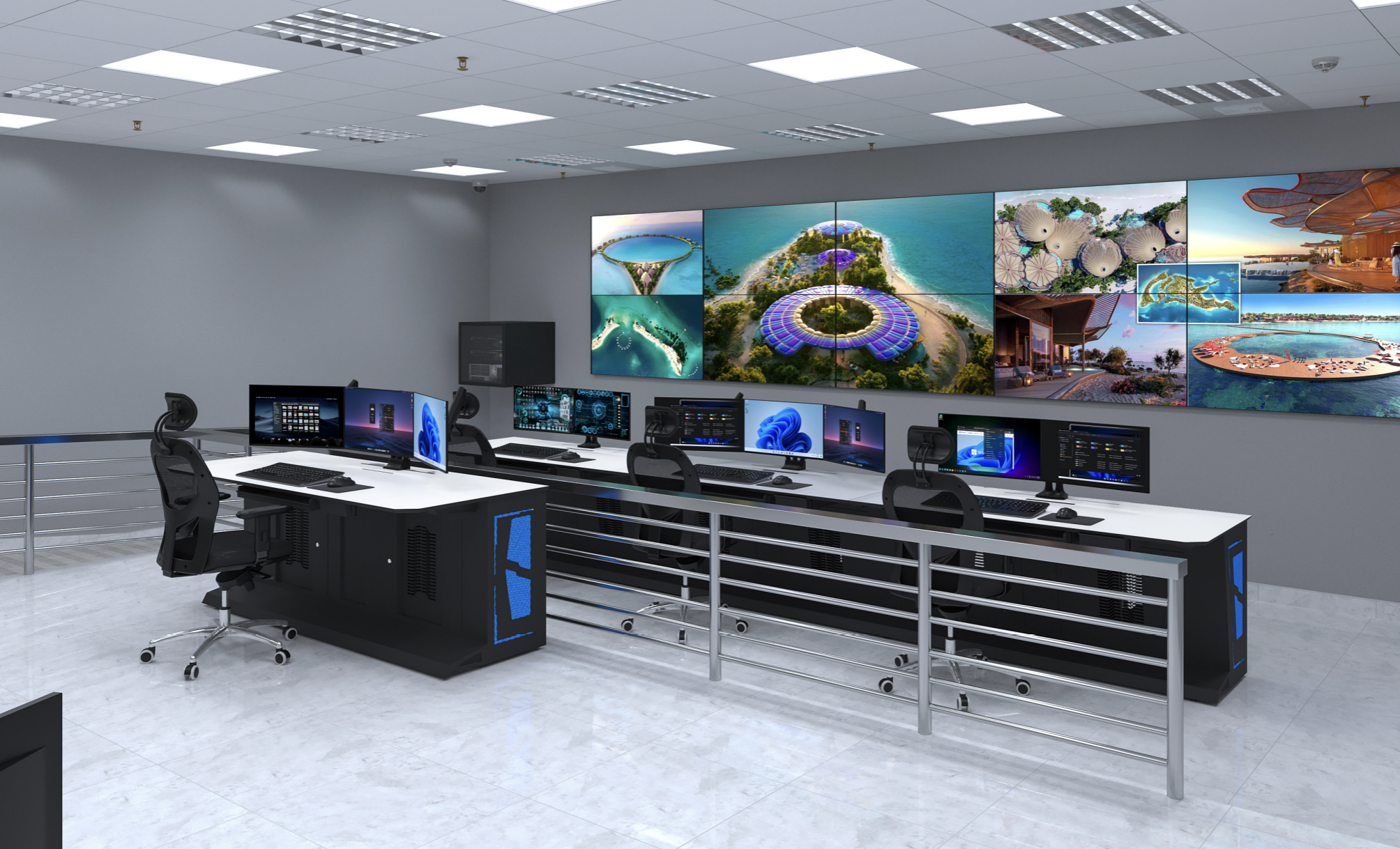
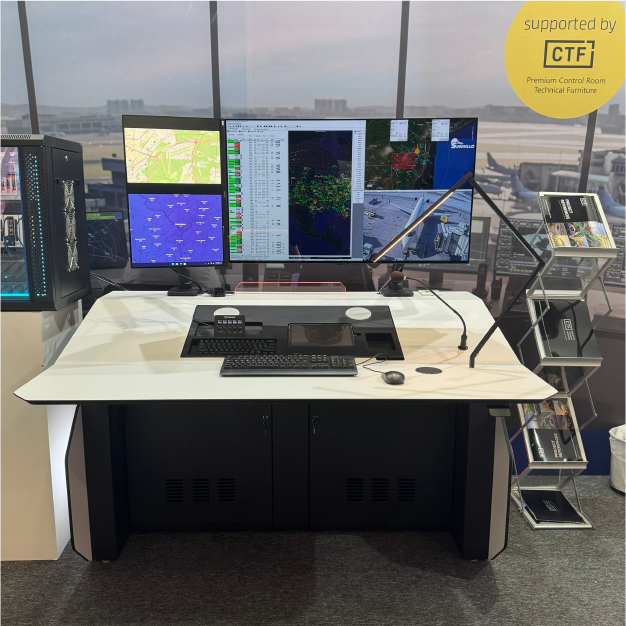
  • Equipment density that standard desks can't support. An ATC console in the UAE might need to support six to ten monitors, multiple input systems, communication panels, and integrated lighting, all in a configuration that keeps every element within easy, natural reach for an operator who may be at that station for an entire shift.
  • Regulatory and standards compliance. Aviation environments operate under strict standards frameworks. The international standard ISO 11064 provides internationally recognized guidelines for airport control room consoles. The system does not support standard furniture solutions.

What Good Airport Control Room Design Actually Looks Like

Good control room design isn’t about aesthetics, it’s about sustaining performance, reliability, and operator focus across every shift. but judged instead by its overall impact of keeping the worker alert, the equipment operating, and the process flowing across each and every shift.

  • Ergonomics Engineered for Long Shifts

    The problem of operator fatigue in aviation operations goes beyond comfort because it directly impacts flight safety. The International Journal of Aviation Psychology published research which showed that air traffic control incidents occur because of pilot fatigue as a major risk factor. The environment needs to have height-adjustable consoles and proper monitor positioning and natural arm placement as essential elements which determine how well an operator performs throughout his entire work duty.

  • Modular Design That Adapts

    Airport technology evolves continuously, with new radar systems, updated communication platforms, and additional monitoring capabilities. Modular airport workstations are built to accommodate that evolution without requiring complete console replacement every time something changes. In the GCC, where aviation infrastructure investment is ongoing and airports are actively expanding, this adaptability makes a significant difference to the long-term value of the investment.

  • Integrated Cable and Systems Management

    An aviation workstation manages an enormous amount of power and data cabling, and poor cable management creates maintenance headaches and potential failure points in systems that cannot afford to fail. Purpose-built airport control room furniture routes power and data internally, keeping surfaces clear, maintenance accessible, and airflow unobstructed.

  • Thermal Performance

    Multiple high-resolution monitors and processing units generate significant heat, and in a room running continuously, that thermal load needs managing from the design stage. Quality airport operations control centre furniture builds airflow pathways and equipment placement in from the start, preventing heat build-up rather than reacting to it once it becomes a problem.

The GCC and UAE Context

The Middle East aviation market stands as one of the world's rapidly expanding aviation markets. The GCC aviation sector is projected to handle over 380 million passengers annually by 2030 due to ongoing expansion work across UAE, Saudi Arabia, Qatar, and Oman.

The growth will create a requirement for control room infrastructure which needs to manage enhanced operational difficulties. Whether it's air traffic control room furniture in Dubai, airport control room consoles in Muscat, or control room technical furniture for airports in KSA, the regional requirement for purpose-built, high-performance aviation workstations is growing alongside the sector itself.

The climate context is an important factor for assessment. The United Arab Emirates and GCC regions require equipment to meet higher thermal management needs, which makes cooling and airflow design elements in console development crucial for their operations beyond what would be needed in temperate regions.

gccuae

Choosing the Right Console for Your Airport Operation

Not every control room has identical requirements, and the right console specification depends on the specific operational context. A few questions worth working through before making any decisions:

  • What is the equipment load per workstation? The number and size of monitors, the communication systems, and the input devices all of this needs to be accommodated in a configuration that's actually practical for an operator to use across a full shift.
  • What are your standards compliance requirements? Aviation environments typically have specific regulatory obligations around workstation design. Make sure any console solution is evaluated against the relevant standards framework, including ISO 11064 where applicable.
  • How will your technology requirements evolve? A console that works for today's equipment but can't accommodate tomorrow's is a short-term solution to a long-term problem. The investment remains protected through time because of modular designs which provide adaptable designs and modular frameworks.
  • What does maintenance look like in a 24/7 environment? Servicing or modifying a workstation in an operational control room requires that maintenance can be carried out without taking the station fully offline. Console design should account for this from the outset.

The Bottom Line

Airport operations and air traffic management function as extreme work environments which exist as the most difficult to operate in throughout the world. The personnel who protect aircraft and traveler safety require workspaces which manufacturers built for their specific tasks instead of using workspaces which originated from different functions.

The investment in dedicated airport control room consoles leads to better operator performance and increased operational reliability while enabling systems to adapt to future aviation Technology advancements.

Airports throughout the UAE and the entire GCC region need to establish proper control room environments because their aviation development matches their operational challenges. The current aviation demands require this process as an essential element which helps achieve modern operational standards.

CTF Consoles creates specialized control room furniture for aviation work environments through its production of the ATC Class console which meets the specific requirements of air traffic control and airport operations. We invite you to discuss your current operational needs with us because we want to help you find the best solution for your new control room or existing control room upgrade project.

1705504277456
1705504278002
1705590713886
1705046058571
1705504278453
1705590716289